Advantages of Experiential Marketing Over Traditional Advertising
May 04, 2026

Most brands investing more in advertising are seeing diminishing returns. Click-through rates are declining, audiences are tuning out, and traditional advertising is increasingly easy to ignore in a crowded marketplace.
That shift is exactly why the advantages of experiential marketing are becoming more relevant and seeing remarkable growth and uptake recently. Instead of interrupting potential customers, experiential marketing creates direct, hands-on interactions turning passive audiences into active participants. Audiences choose when and where to interact and make the time to do so.
In this guide, you’ll learn:
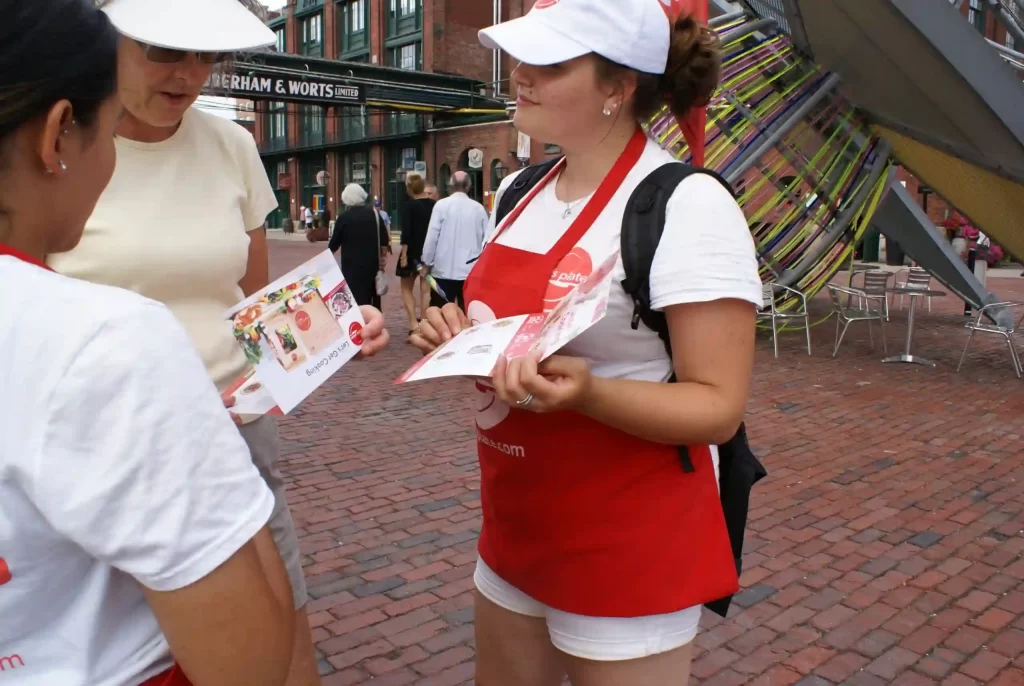
Traditional advertising is built on exposure – impressions, reach, and frequency across channels like display ads, TV, and paid social. Experiential marketing is built on participation. At Yellow House, we know that while traditional media actively measures “impressions,” experiential marketing done well delivers a “depth of impression” that is very hard to measure, but cannot be ignored as an unparalleled brand connector.
Instead of telling a target audience about a brand, it allows them to experience it directly through experiential events such as in-person experiences, , pop-up shops, product demos, interactive installations, and immersive experiences and even VIP dinners, conferences and learning events on the B2B side.
| Traditional Advertising | Experiential Marketing |
| One-way communication | Two-way interaction |
| Passive consumption | Hands-on interaction |
| Awareness-focused | Engagement marketing + conversion-focused |
| Easy to ignore | Designed to be memorable |
The result: experiential marketing creates purposeful engagement, while traditional ads compete for shrinking attention across social media platforms and digital channels. People are also much more likely to share their in-person experiences on Social Media or via word-of-mouth, greatly amplifying the message and building in valuable third-party endorsement of the brand.
Experiential marketing strategies are designed to drive active participation and meaningful engagement.
Instead of scrolling past content, audiences:
This shift from passive viewing to hands-on interaction is a core reason why experiential marketing works better than traditional ads, especially when the goal is to boost brand awareness and drive sales.
Experiential marketing creates moments audiences remember long after the event ends.
By combining sensory input, real-world interaction, and storytelling, brands build memorable experiences that feel personal rather than promotional. People retain experiences far more effectively than static content, leading to stronger brand recall, deeper brand love, and a lasting impression that advertising alone rarely achieves at the same depth.
When consumers engage in direct brand experiences, they feel included in the brand story and connected to a shared moment.
These emotional triggers lead to:
Experiential marketing transforms customers into participants—and participants into long-term brand advocates.
Experiential marketing campaigns naturally generate social media buzz, user-generated content (UGC), and word-of-mouth marketing.
Attendees:
Peer-driven content is consistently more trusted than traditional advertising, making brand advocacy a powerful driver of growth. Many experiential marketing examples show that Instagrammable setups can significantly increase a brand’s reach beyond the event itself.

Unlike traditional advertising, experiential marketing provides measurable results based on real behavior.
Brands can gather insights through:
This enables teams to refine future marketing efforts and demonstrate ROI using valuable insights not just impressions.
Experiential marketing is not a replacement for all marketing, but in key scenarios, it delivers significantly stronger outcomes.
Experiential campaigns create distinctive, interactive moments that stand out where generic ads blend together.
For brands focused on meaningful engagement, community building, and long-term loyalty, experiential marketing delivers deeper impact than broad-reach campaigns.
Hands-on interaction builds trust quickly, reduces friction, and accelerates purchase intent.
Experiential marketing tracks participation, behavior, and conversions—making it ideal for performance-driven strategies.
The most effective strategies integrate multiple channels rather than treating them separately.
A strong omnichannel approach includes:
Traditional advertising builds reach. Experiential marketing builds connection. Digital channels convert that connection into measurable results.
The key benefits of experiential marketing include higher engagement, stronger brand recall, emotional connection, measurable results, and increased brand loyalty. It allows consumers to interact directly with a brand in a meaningful way, leading to stronger relationships and conversions.
Experiential marketing is important because consumers are increasingly resistant to traditional advertising. It enables brands to create authentic interactions, build trust, and stand out through immersive and engaging experiences.
Experiential marketing strengthens customer loyalty by creating emotional connections. When consumers actively participate, they are more likely to remember the brand, trust it, and become long-term advocates.
Event marketing focuses on organizing events, while experiential marketing focuses on creating interactive and immersive experiences. Not all events are experiential, but experiential campaigns are designed to drive participation and engagement.
Yes. Experiential marketing can drive sales by allowing consumers to experience products firsthand. This increases purchase intent, reduces hesitation, and leads to both immediate and long-term conversions.
The advantages of experiential marketing go beyond engagement—they redefine how brands connect with their audiences.
While traditional advertising still has its place, experiential marketing delivers:
For marketing teams evaluating future marketing efforts, the shift is clear: creating experiences is no longer optional, it’s a strategic advantage.
If you’re exploring how experiential marketing fits into your strategy, the next step is identifying where deeper engagement can drive better outcomes.
At Yellow House Events, an event agency in Toronto, we specialise in designing experiential campaigns, events, activations and custom experiences that are strategic, measurable, and built to last. As a leading experiential event agency in Toronto, we help brands move from visibility to genuine connection.From brand activations and pop-up events to full-scale immersive experiences, and B2B events, we help brands move from visibility to genuine connection. Explore our experiential marketing services or get in touch to start building experiences your audience will remember and act on.